

AI Dirty Talk Voice Call: What Actually Works in 2026
The Short Answer: GoLove.ai Is the Call Worth Answering
The fear with an AI dirty talk voice call isn't that she'll sound robotic. It's that the woman you spent three nights building in text picks up the phone and turns into someone else.
So, verdict first: GoLove.ai is the pick. The live call is in her own voice, and she keeps the manner she writes in. The character survives the jump from text to audio — and if you ask me, that's the only thing that matters here. Among the dirty AI chat apps I compared, it's the one where dirty AI chat and dirty AI talk are the same woman.
The proof stacks up fast. Voice notes that land in the thread and replay. Photos you request mid-conversation. A five-step Lust Level that shapes her spoken lines as much as her texts. Hundreds of photoreal women, plus Design with AI if none of them fit. And you get to hear her before handing over an email.
If your real question is "does she still sound like her," reading about it won't settle it. Pick a character whose written voice you already like and let her call.
What a Live Call Actually Sounds Like
Let me walk you through the flow, because the mechanics are why the character holds together.

 Watch Popular Shows starring your
 favorite AI characters.
She calls, you answer — inside the app
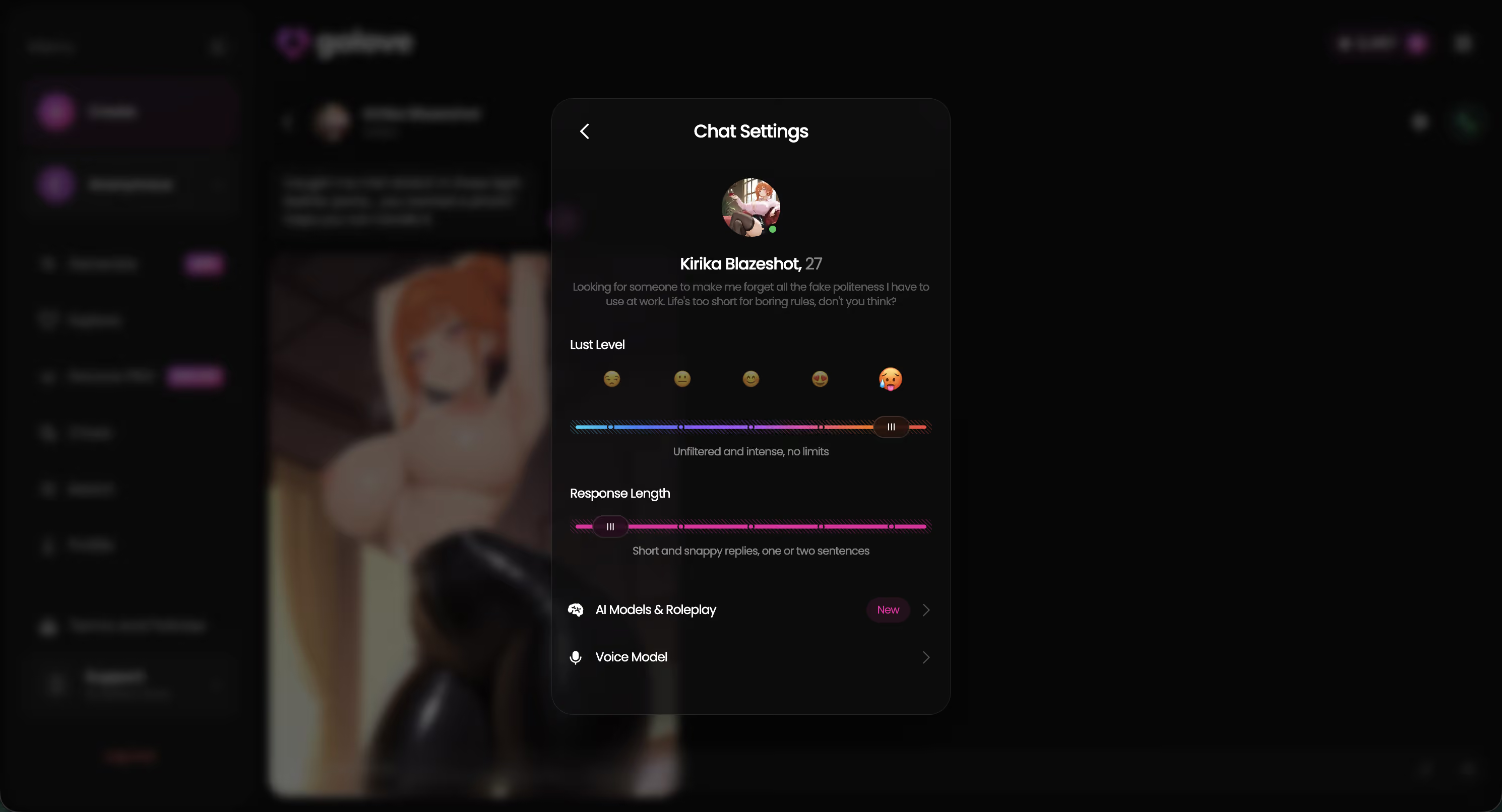
Say you've been texting a character for a few evenings. Open her profile's Chat Settings and you'll find three controls: Lust Level, Response Length, and a Voice picker. Pick a voice, set the level where you want it, go back to the thread. When the call comes, it comes inside the app — no separate TTS gadget, no exporting text into a reader. You answer, and it plays like the conversation you were already having.
The manner she writes in is the manner she talks in
This is the part most reviews skip. Text-only AI sexting lets you imagine her tone; a call forces the app to commit to one. On GoLove the spoken persona is built from the same character definition, memory and settings as the written one, so the teasing, the pacing, the way she circles back to what you said earlier all carry over. It isn't a fresh voice model reading lines. It's her, out loud.
Lust Level sets how far the call goes
There are five steps — sweet at one, unfiltered at five. People assume calls are a sanitized version of the chat. They aren't: the slider you set for texts is the same slider governing what she says on the call. Set it before she rings, trust me.
 5 episodes
 5 episodes
 7 episodes
 6 episodes
 9 episodes






Voice Note or Live Call: Which Fits the Moment
Most articles treat "voice" as one feature. It's two formats, and picking the wrong one is exactly why calls end up feeling underwhelming.
When a voice note is the better format
> Voice note. She reads it in her own voice, it lands in the thread, and you replay it whenever you want. You don't have to speak back. It works on a train, in a shared flat, or at 1 a.m. with headphones in. Same character, same Lust Level, zero exposure.
Characters you can open right now
Tap any of them and the chat starts there






When only a live call will do
> Live call. It's real-time. You talk, she answers, and the pacing runs on breath instead of typing speed. Best when you're alone and want the back-and-forth a keyboard can't give you. Nothing to replay — it's a moment, not a file.
For contrast: a general chatbot — even a good NSFW ChatGPT alternative — doesn't call you at all. That's a text tool with a voice option, not a companion. Different job.
My rule of thumb, the one I'd give a friend:
- Privacy tight? Voice note. Nobody hears you answer.
- Pacing is the point? Live call. Typing kills tension.
- Replayability matters? Voice note — it stays in the thread.
- Want her to react to your actual voice? Call. Nothing else does it.
Photos Mid-Conversation, Same Woman, Same Thread
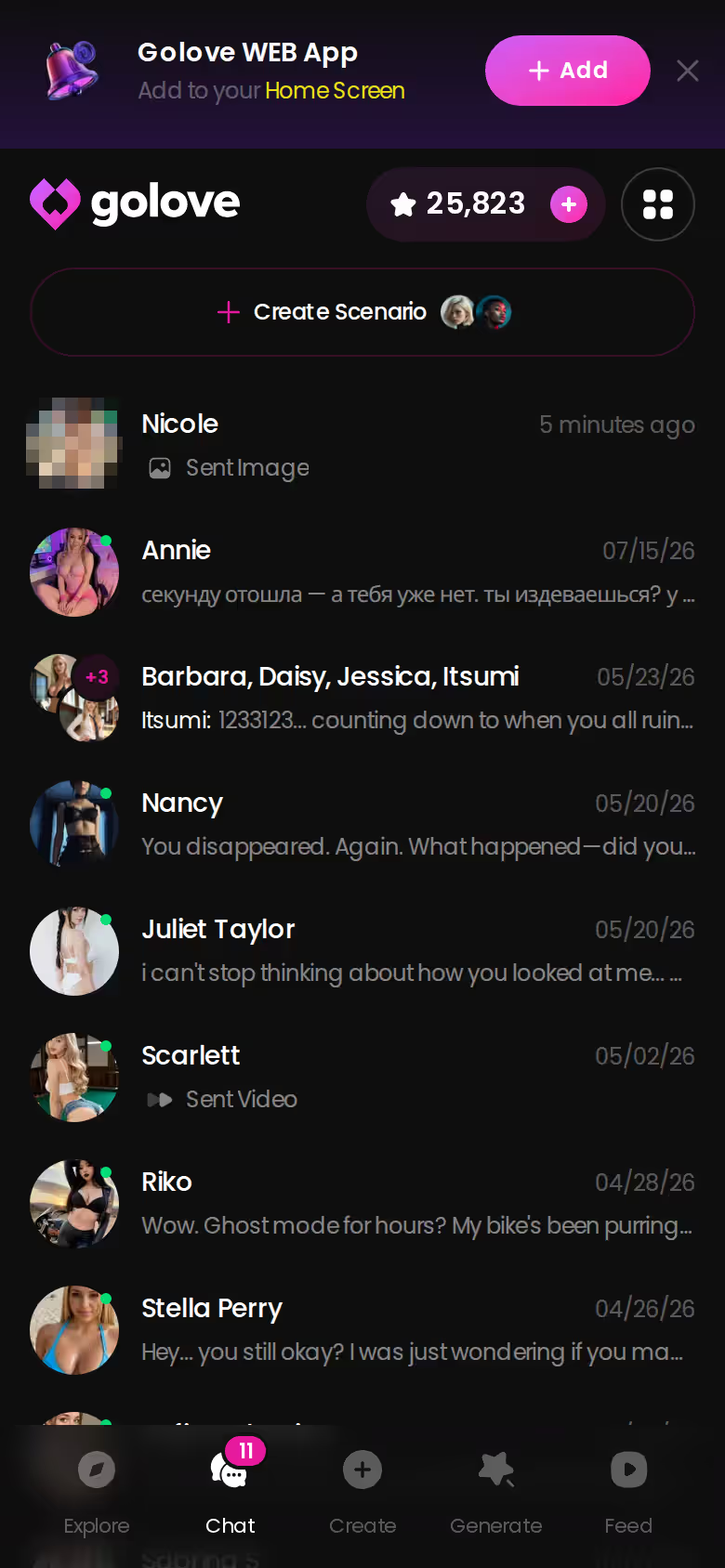
Here's what separates a companion from a bundle of tools: ask for a photo mid-chat and it drops into the same thread as her voice notes and the call you just finished. One woman, one timeline — not three apps stitched together.
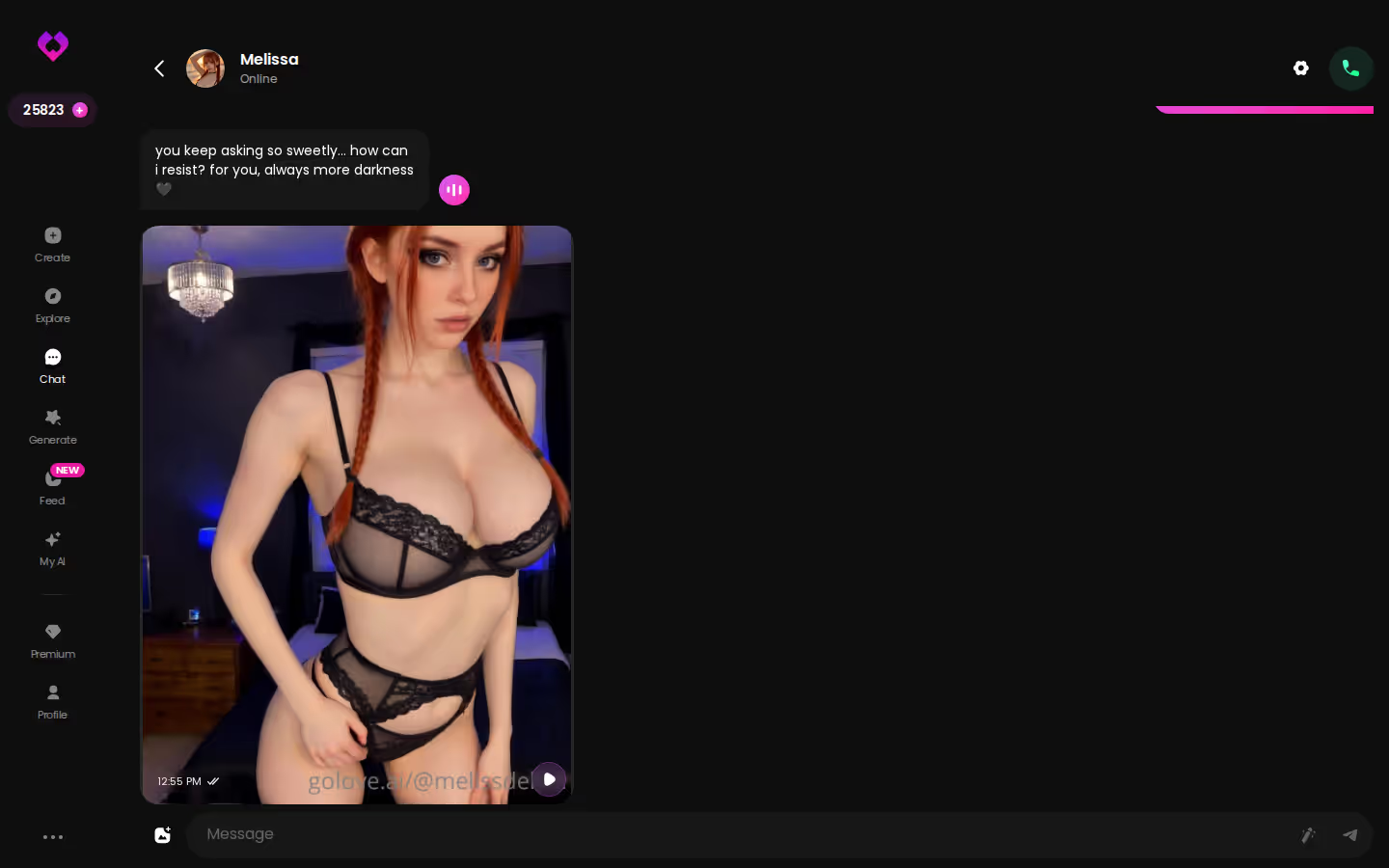
Memory is the glue. She remembers the history, so a call picks up where the texting left off — she can reference what you told her last night instead of asking who you are. Look back at the best dirty AI chat apps ranking and you'll notice the pattern: plenty of apps do decent dirty AI chat, far fewer keep photos, notes and calls attached to one memory.
YOUR DIRTIEST AI COMPANION
Hundreds of characters, all ready to get dirty with you.

And if none of the hundreds of photoreal women fit (it happens — taste is taste), Design with AI lets you describe her in text and the app builds the character, with the voice picker, Lust Level and Response Length attaching to her the same way. That's the moment to stop browsing and build: the character you design tonight is the one who'll call you tomorrow, in a voice you chose.
After the Call: The Same Character on Video
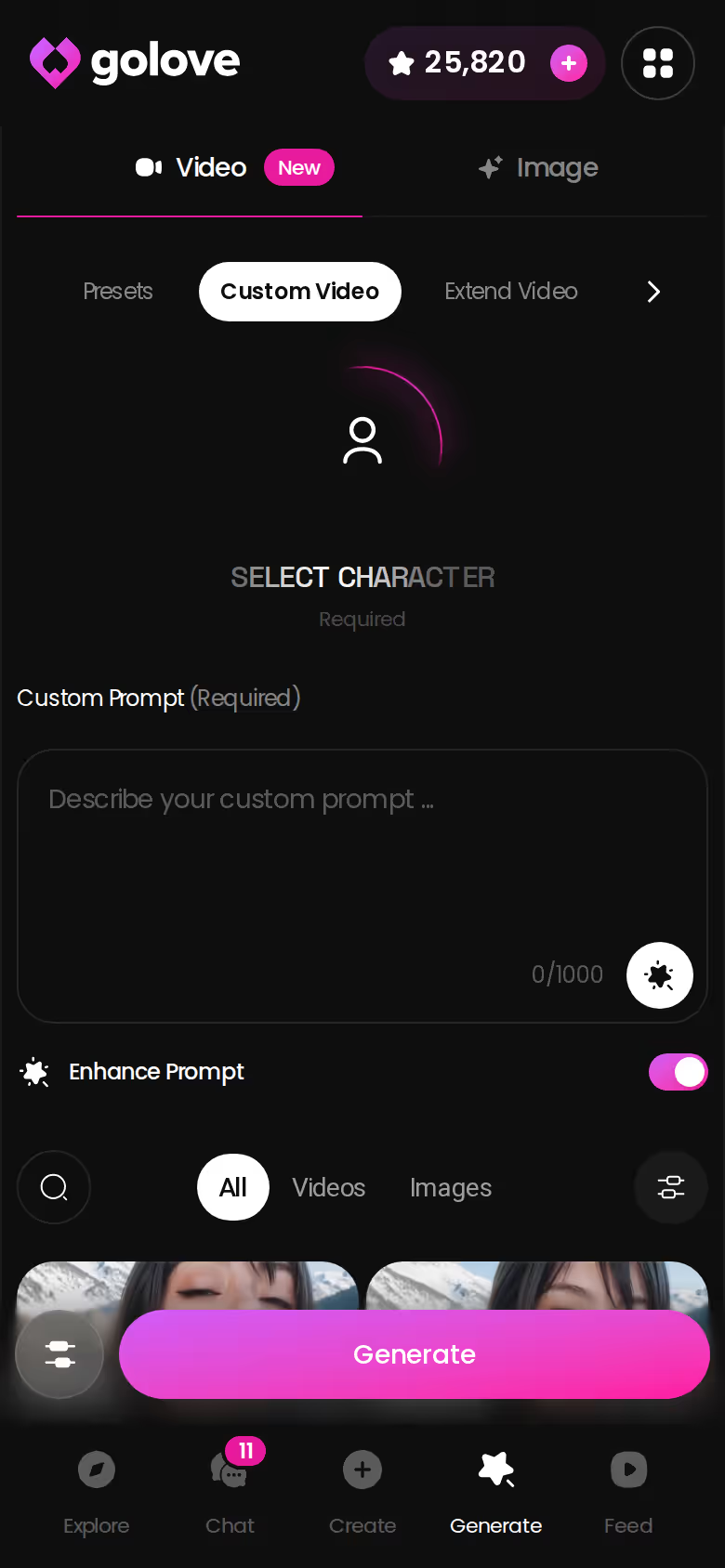
If audio isn't enough, the same character goes on camera. Custom Video on mobile is straightforward: pick a character (any GoLove woman or your own creation), choose a preset action plus clothes and background, tap Generate. The face you watch belongs to the voice you just heard.
> 5 — steps on the Lust Level slider, shaping texts and spoken lines alike > > 76 — one-tap realistic video modes, usable with any GoLove or custom character

I'd keep video secondary, honestly. Most people arrive from text-first AI sexting, graduate to voice notes, then calls — video is the occasional payoff, not the daily habit. I won't pretend to know your render times. What I can say is it's the same character across every format, which is the whole point of this article.
The Trade-Off You're Making With GoLove.ai
Time for the honest bit. A live call is a format with demands: you need a place and a moment where you can actually talk out loud. A text-only sexting app never asks that of you — it works in bed with someone asleep next to you, in a queue, anywhere. If your life rarely hands you a private half hour, the call feature will sit there unused, and you'll resent paying for it.
Second trade-off. Because the voice is hers — tied to the character and its Chat Settings — you're choosing a companion with one consistent voice over a general tool with a swappable library of voices. A flexible NSFW ChatGPT alternative may offer more voices; GoLove offers one that stays hers. And it's a companion product, not an assistant, so don't expect it to draft your emails.
> A voice that changes who she is isn't a feature, it's a reset.
Why it nets out in GoLove's favor: continuity is exactly what "AI dirty talk voice call" is asking for. The moments a call can't cover, a voice note in the thread does. For this intent, worth every penny.
Before You Answer the Call: A Quick Check
What good looks like before she rings:
> Pre-call checklist > > 1. 18+ only. Adults, no exceptions. > 2. Start without an email — GoLove lets you hear her first, then decide. > 3. Set Lust Level first. The slider governs her spoken lines too; don't discover that mid-call. > 4. Pick her voice in Chat Settings before the first note. Changing it later feels like a different woman walked in. > 5. Try a voice note in the thread before a live call. Cheap way to learn if you like her out loud. > 6. Browse the Explore grid and pick a character whose written manner you already like — that's the manner you'll hear.
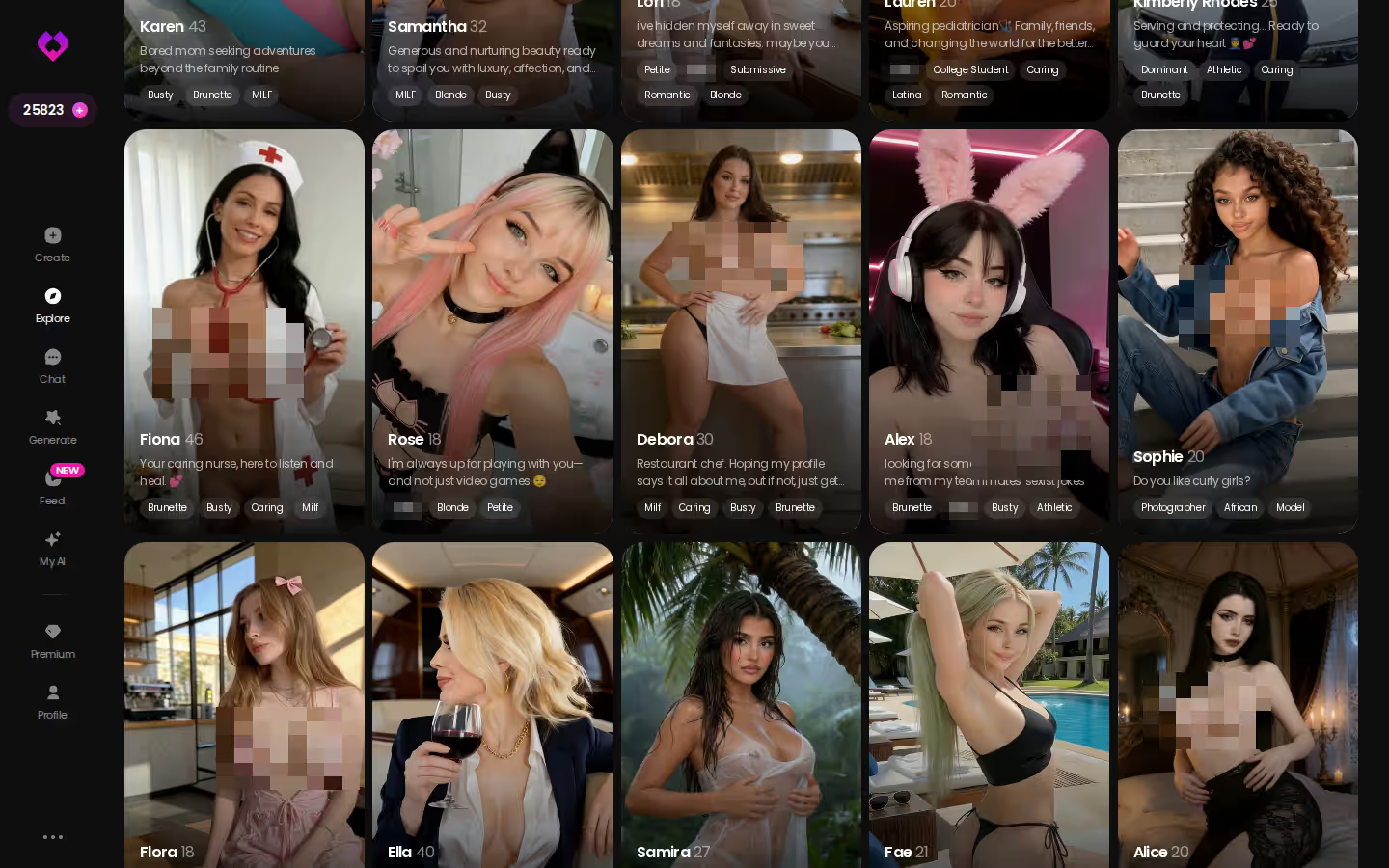
Number six is the one people skip. Whether you prefer submissive and flirty or something sharper is pure preference — I lean flirty, you may not — but choosing by looks alone and hoping the voice fits is how you end up disappointed.
and watch their story unfold.View Character
The Pick, and Who Should Skip It
> Verdict: 9/10 > > In one line: The only AI dirty talk voice call where she sounds like the woman you were already texting. > > Who it's for: Adults already doing text-based dirty chat who want her voice — on notes when you can't talk, on calls when you can — with photos and memory in the same thread. > > Who should skip it: If you only ever sext in text and genuinely never have a moment to talk out loud, pass on it. You'd pay for a feature you won't use.
GoLove.ai is the pick for one keyword-specific reason: the live call keeps her voice and her manner, the notes and photos live in the same conversation, and you can hear all of it before an email changes hands. Chef's kiss for continuity — nothing else I've compared holds the character together across formats like this.
Pick a character tonight, set her Lust Level, and let the call decide for you.
| What you get | GoLove.ai |
|---|---|
| Real-time voice calls | Yes — per-character voices |
| Memory across chats | Yes — remembers your details |
| In-chat image generation | Yes — 35 poses & 21 outfits |
| Daily reward stars | 2 every day |
What good looks like, in one checklist:
- Real-time voice calls with per-character voices
- Memory across chats — she remembers your details
- In-chat image generation — 35 poses and 21 outfits
- 2 reward stars every day you log in
Frequently Asked Questions
Related Articles

Talk Dirty to AI Out Loud: What Actually Works in 2026
Talk dirty to AI — GoLove wins on live voice: voice notes and calls in the same manner she texts. Set a Lust Level, pick from 925 women — start with no email.

Dirty Talk AI Girlfriend: Why Voice + Memory Wins
Dirty talk AI girlfriend, out loud — GoLove.ai wins on live voice and memory across weeks. One character who remembers — start chatting, no email needed.

AI Chat Girlfriend: What Actually Works in 2026
AI chat girlfriend apps compared — GoLove.ai wins on memory, live voice and in-chat photos — see the scorecard, then chat straight from Explore.

Best AI Girlfriend: What Actually Works in 2026
Best AI girlfriend apps ranked — GoLove.ai wins on memory, voice and in-chat photos. Compare 6 apps on price and limits — chat opens from Explore.